

Chereef25
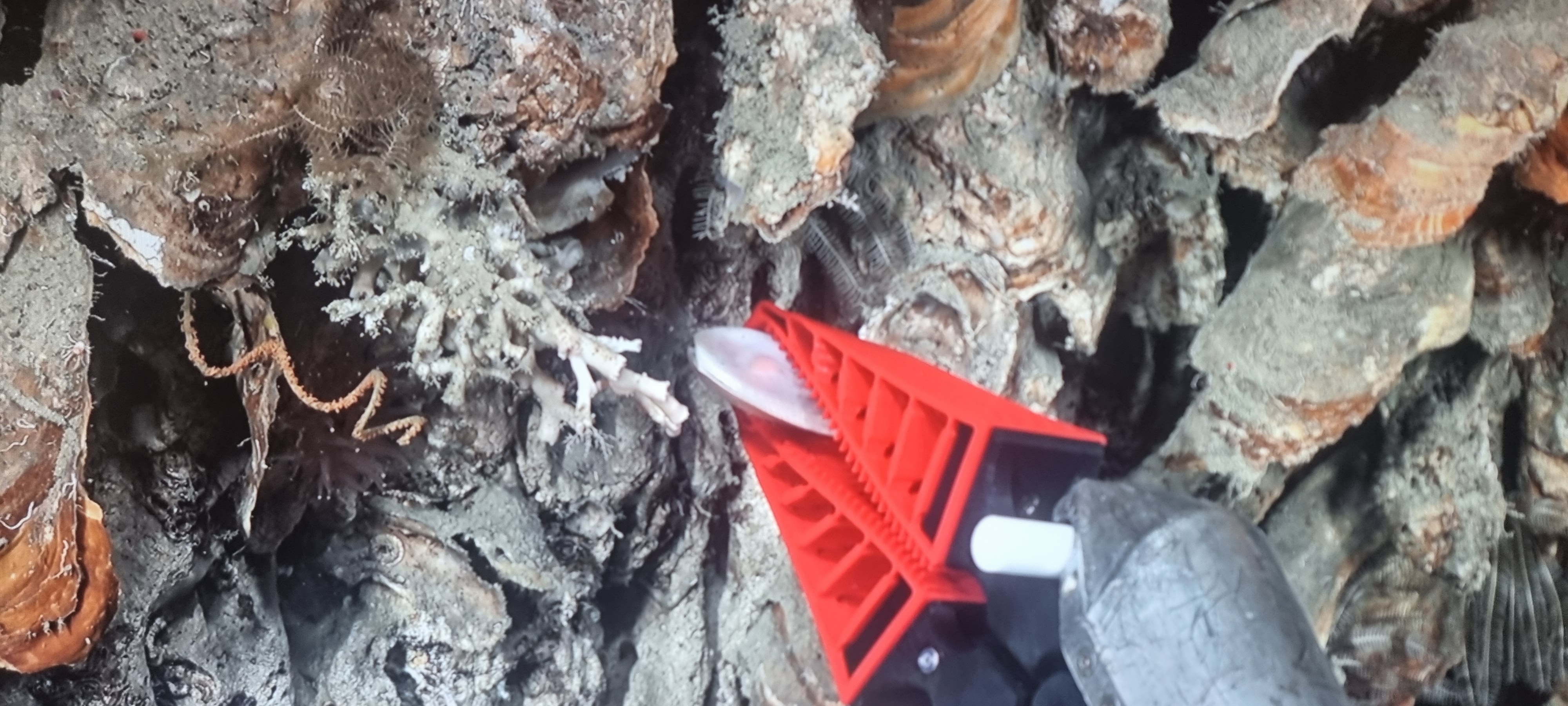
Sampling deep-sea coral and their associated fauna from the Bay of Biscay
The ChEReef-OBS cruises aim at describing and understanding cold-water coral reefs dynamic in submarine canyon of the Bay of Biscay (doi: https://doi.org/10.18142/248). It uses Marley, an autonomous sea-floor observatory, deployed for 5 years (2021-2025) in the Lampaul canyon, a cold-water coral reef, in approximately 1000m of depth. More on the Chereef campaign:
https://www.facebook.com/CampagneChereef
https://w3z.ifremer.fr/espacecommunication/Planete-Ifremer/En-bref/ChEReef-2025-retour-en-images
During the last Chereef25 sea campaign on the Research Vessel “Le Pourquoi Pas?”, 3 cold water coral species, polychaetes, crinoids and bivalves have been sampled using the remotely operated underwater vehicle (ROV) Victor 6000 together with the great “ROV man” expertise. CONTRAST will assess whether and at which level anthropogenic contaminants, included the CONTRAST prioritized list of CEC, reach this remote area.
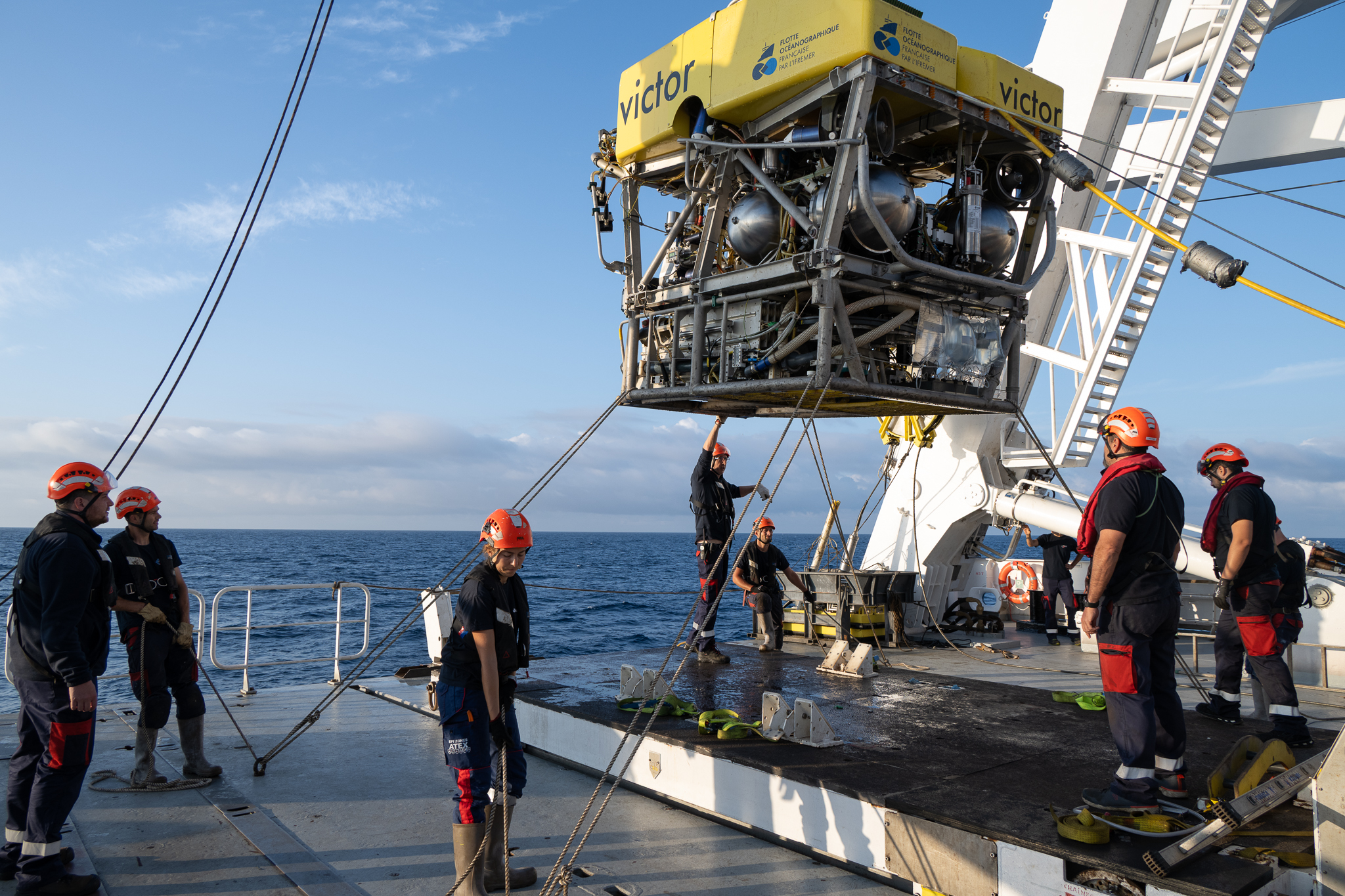
We have also exposed one of the 3 coral species Desmophyllum pertusum (formely named Lophelia pertusa) and the bivalve Acesta excavata to 2 CEC: one pesticide (trimethacarb) and one UV-filter (octinoxate). We will look at the physiological responses of both species to this contamination. The experiment conducted on the “Pourquoi Pas” was similar to the one performed at Austevol last July with the aim to mutualize our effort and knowledge on this remote area and difficult to sample species.
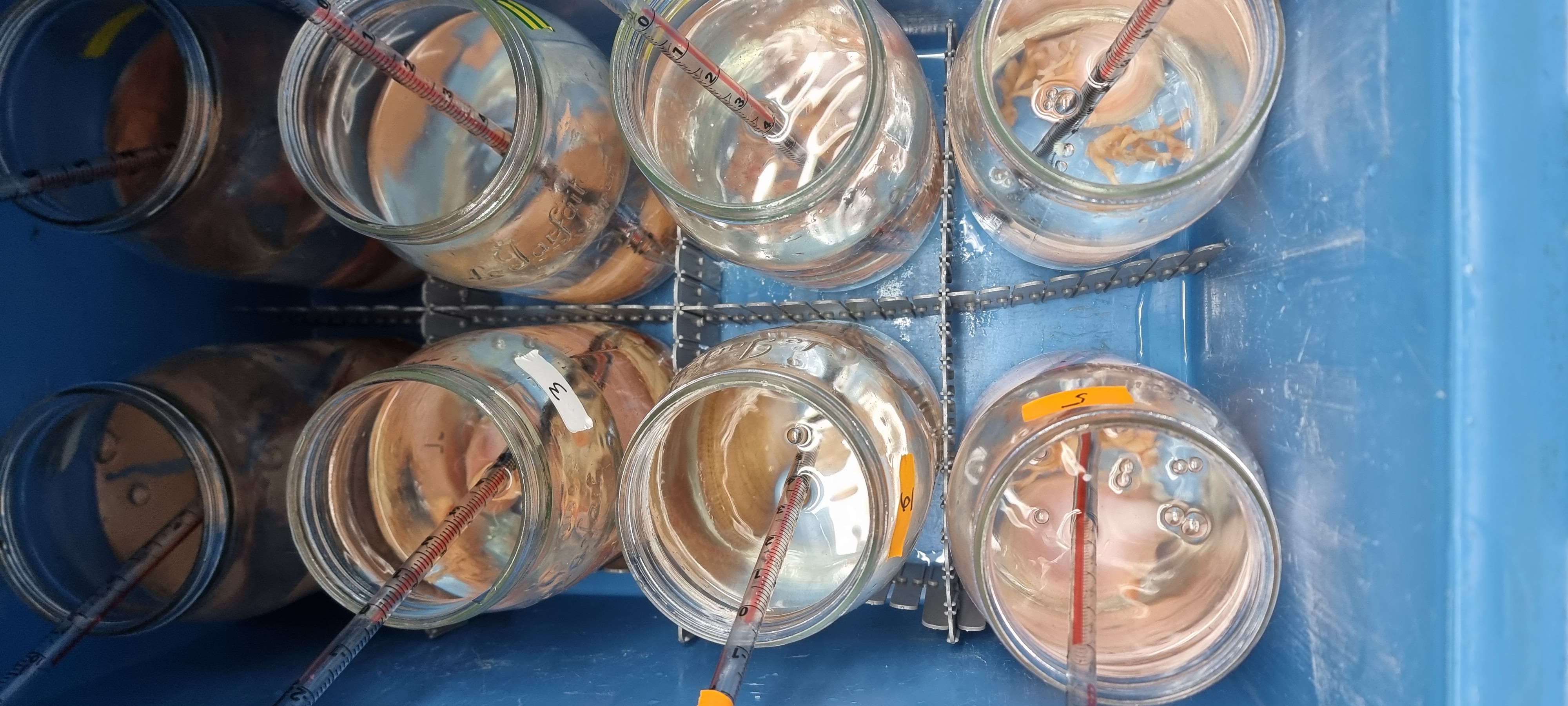
Experimental unit with Desmophyllum pertusum (formely named Lophelia pertusa) and the bivalve Acesta excavata.
Contact: Aourell Mauffret (IFREMER): Aourell.Mauffret@ifremer.fr